Rank Tracking
Finding what people actually search for and mapping those queries to the pages that should rank for them. Clustering, intent classification, and opportunity scoring.
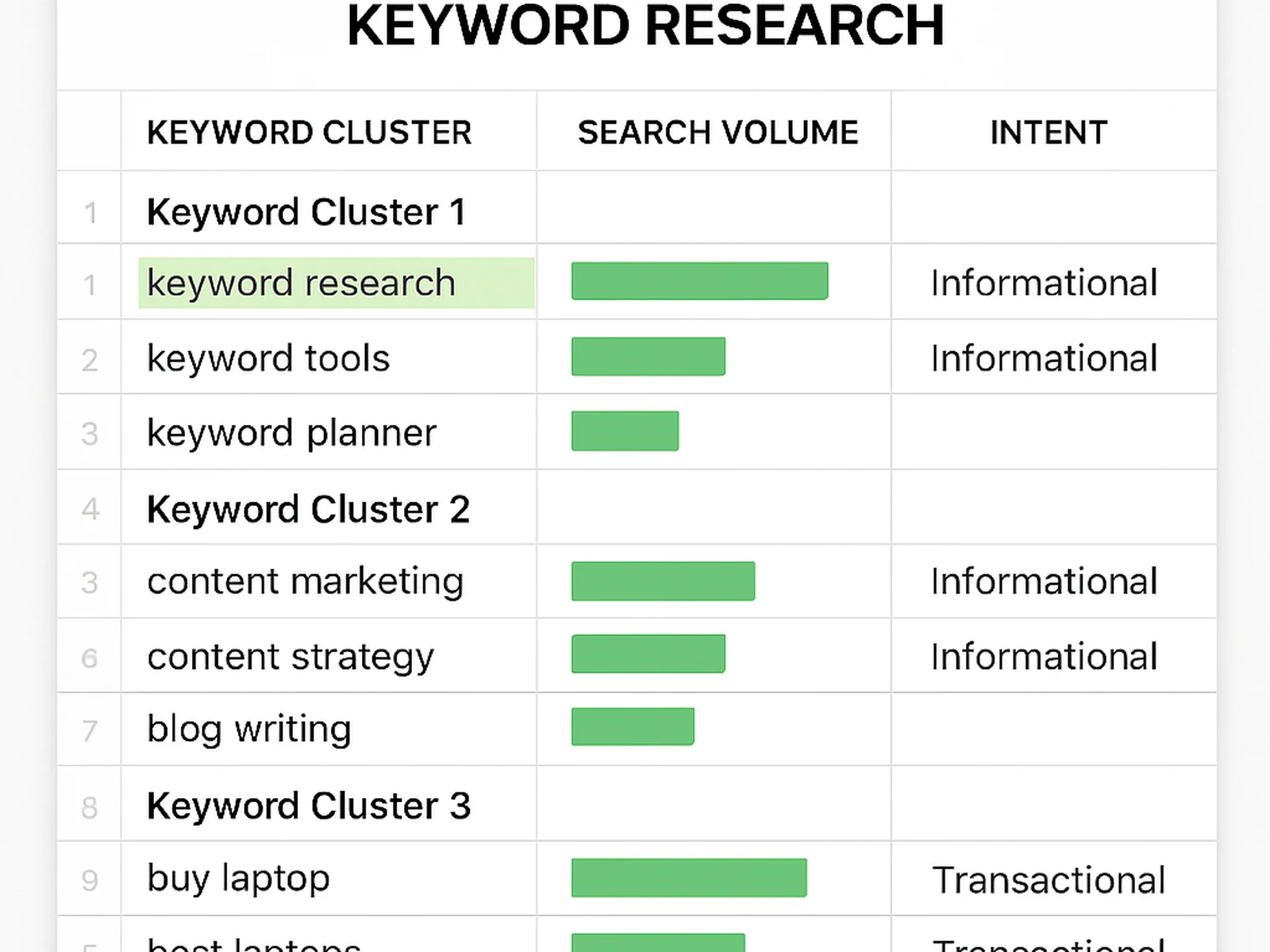
What keyword research actually means
Keyword research is not a list of words with search volumes attached. Done properly, it is a complete map of what your potential customers search for, why they search for it, what they are trying to do when they find a result, and how your pages can match that intent better than competitors currently do.
The raw data of volumes and difficulty scores only becomes useful when you have classified the intent behind each query: are they researching, comparing, or ready to buy? Are they looking for an answer or a service? Is your site even capable of ranking for this query given your current authority? These questions shape which keywords go onto a target list and which get set aside.
How we structure the deliverable
Our keyword research output is a structured spreadsheet with full documentation, not a raw data dump. Every included keyword has a recorded intent classification, a mapped destination URL, a priority score, and a note on the competitive situation for that query. You can hand this document to a content writer, a developer, or a marketing manager and they will know exactly what to do with it.
The deliverable also includes a summary of findings: the highest-opportunity clusters, the queries where you are already close to ranking and could move quickly with small changes, and the content types your site is currently missing.
Why clustering matters
Keywords do not work in isolation. A page that targets a single keyword often loses to a page that covers the full topic cluster around that intent. Our clustering maps which queries belong together so that the page architecture reflects how search engines understand topics, not just how individual words appear in search volumes.
Other services
On-Page Optimization
Every page that should rank needs the right structure. Title tags, hea...
from €219,40Backlink Audit
Understanding what your current backlink profile looks like, which lin...
from €148,70SEO Copywriting
Writing page content that ranks and converts. Service pages, landing p...
from €248,30Analytics Setup
Getting your measurement right before optimizing. GA4 configuration, S...
from €124,90Rank Tracking
Ongoing visibility into what is ranking, how positions are moving, whi...
from €98,70